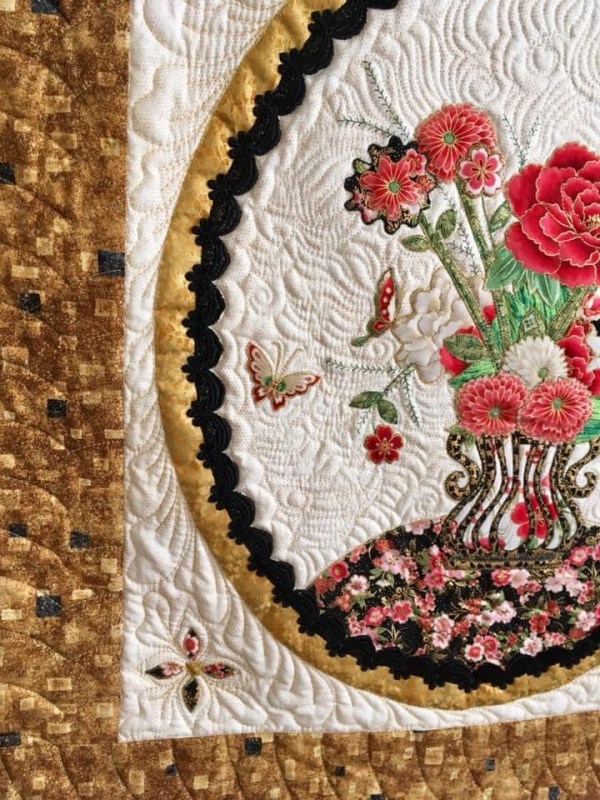
What a fancy name! But what is it?
Broderie Perse is French for “Persian embroidery”. The technique allows placement of elements, often birds or flowers, onto a solid piece of fabric to create a new design. Broderie Perse originated in Europe in the 17th century. In the 1900’s, when Chintz fabric was very expensive, the Broderie Perse technique allowed sewers to cut elements from the fancy patterned Chintz and sew them onto a cheaper solid background. This made the Chintz go further while still giving the look of a high quality design.
I first discovered Broderie Perse (BP) in the Esther Aliu applique Facebook group that I joined in 2018. I was new to applique, experimenting with different applique techniques, and was captivated by the work of Glenda Jean Hepburn. Glenda often uses BP to give a true to life appearance to her appliqué work.
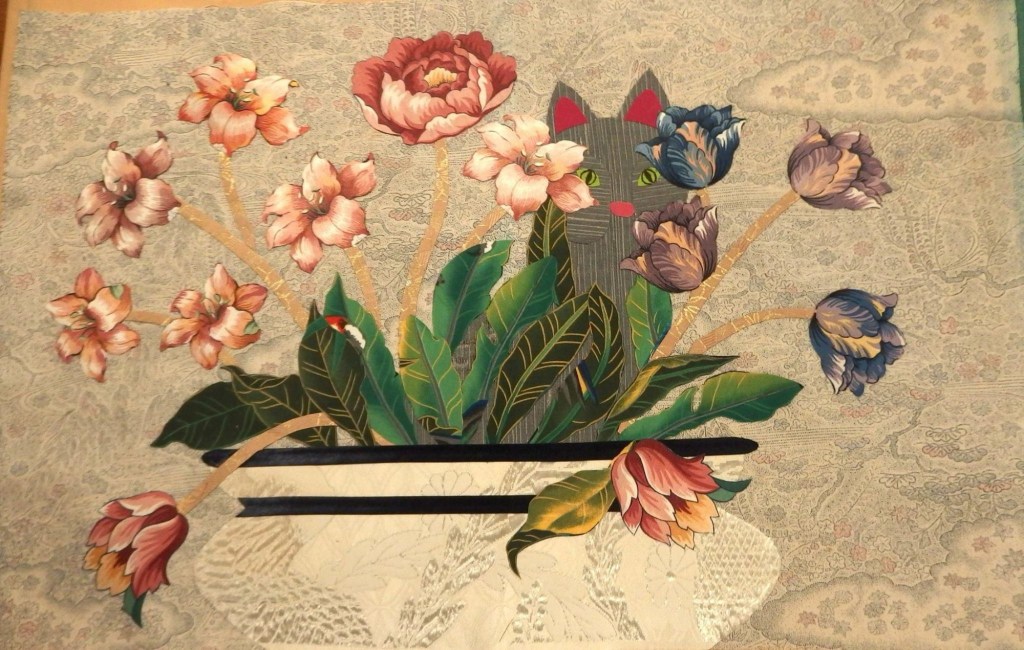
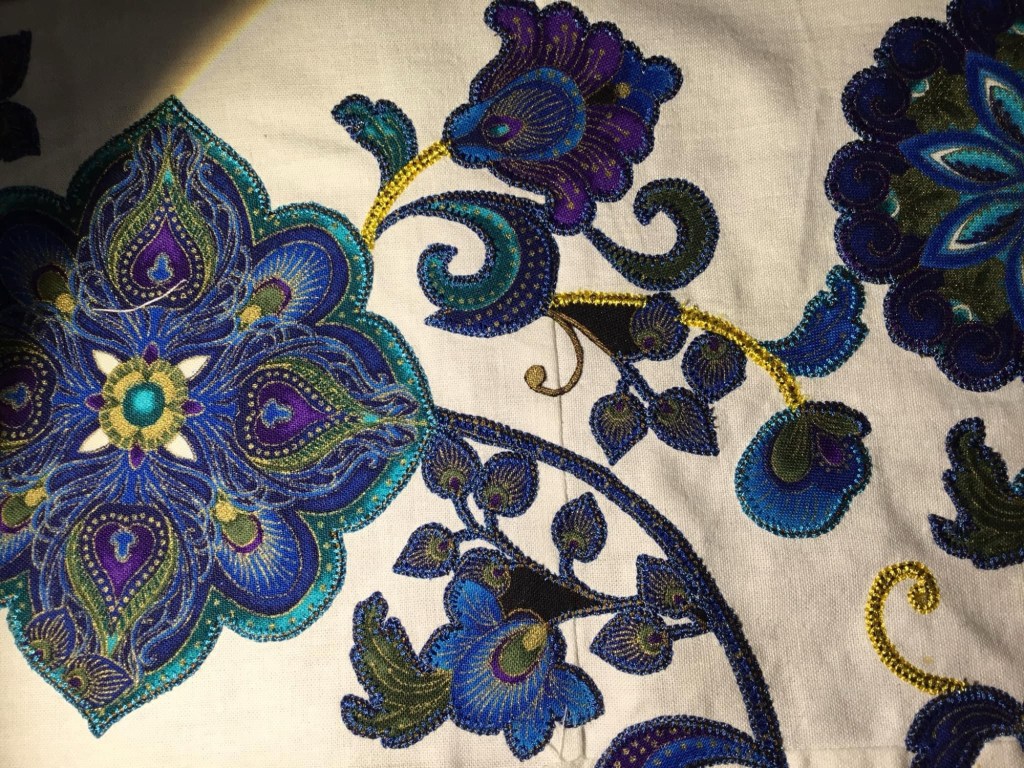
Who wouldn’t want to tread softly in Glenda’s footsteps and make some absolutely fabulous BP of their own?
You can do BP with most applique techniques – a turned edge and hand stitching, a turned edge and machine stitching, or with a raw edge and machine stitching. My preference is raw edge with machine stitching. I like to use BP to add a touch of amusement, or fun, or to introduce birds (my favorite element) into my applique pieces.
I like to prep my fabric for Broderie Perse using spray starch, ironing and drying throughly before using a fusible web media. My favorite media is Heat n Bond Lite, which is ironed onto the back of the fabric PRIOR to cutting the fabric. If I plan to eventually use numerous elements (like birds, flowers or fish) in the yardage, I will iron a half yard section of fabric all at once.
After applying your media, rough cut around each motif with at least 1/4′ to spare outside the lines of your motif.
Finally, using a pair of small, sharp scissors (I have both a pair of small Fiskar micro tip scissors and the 4″ Karen Kay Buckley appliqué scissors), carefully and slowly cut out your motif. Cut too close and you lose part of your motif or your stitching eats into the design. Cut too far and they don’t look realistic. It really does take patience and good pair of eyeglasses! I have my optician make up close work/reading glasses with a higher strength than my usual glasses and they are really helpful for this type of work.

Broderie Perse is not a fast or quick technique! It adds more work and time to constructing your piece, but the rewards are substantial! BP is not just a “pretty” thing. It can add texture, color, depth, realism, movement, and whimsy to your work. It also helps guide the eye around a larger or more complex piece of work. BP can overlap blocks, or sashing, or wander into a border. I think of it as the mischievous little sister of applique work.
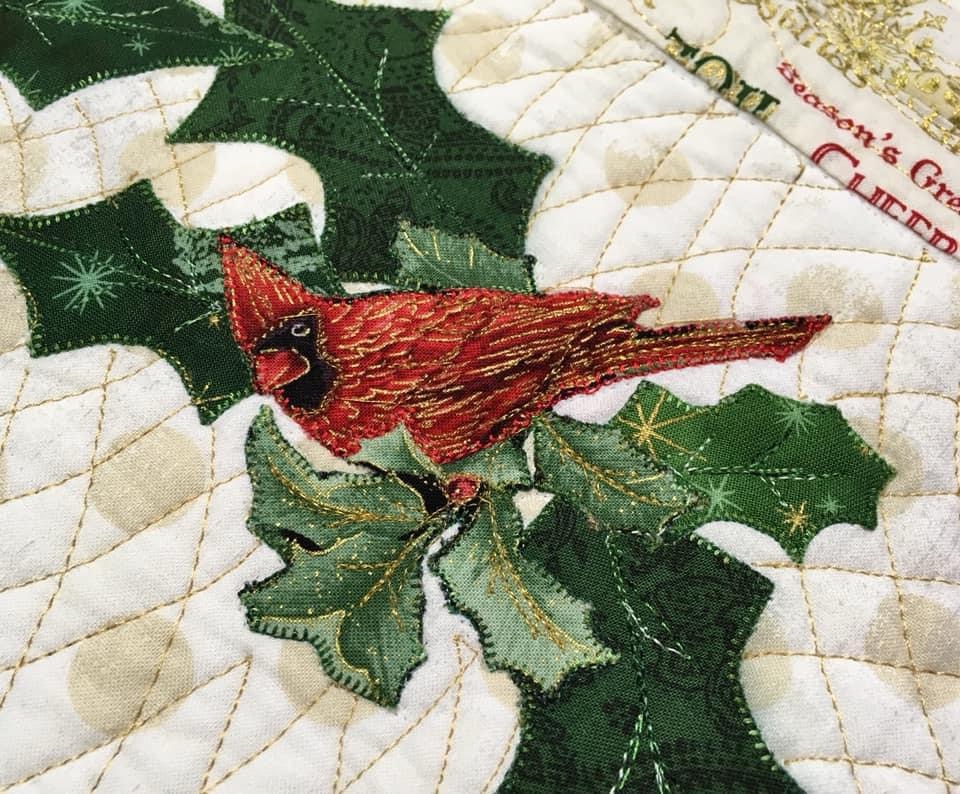
Broderie Perse examples in my work.
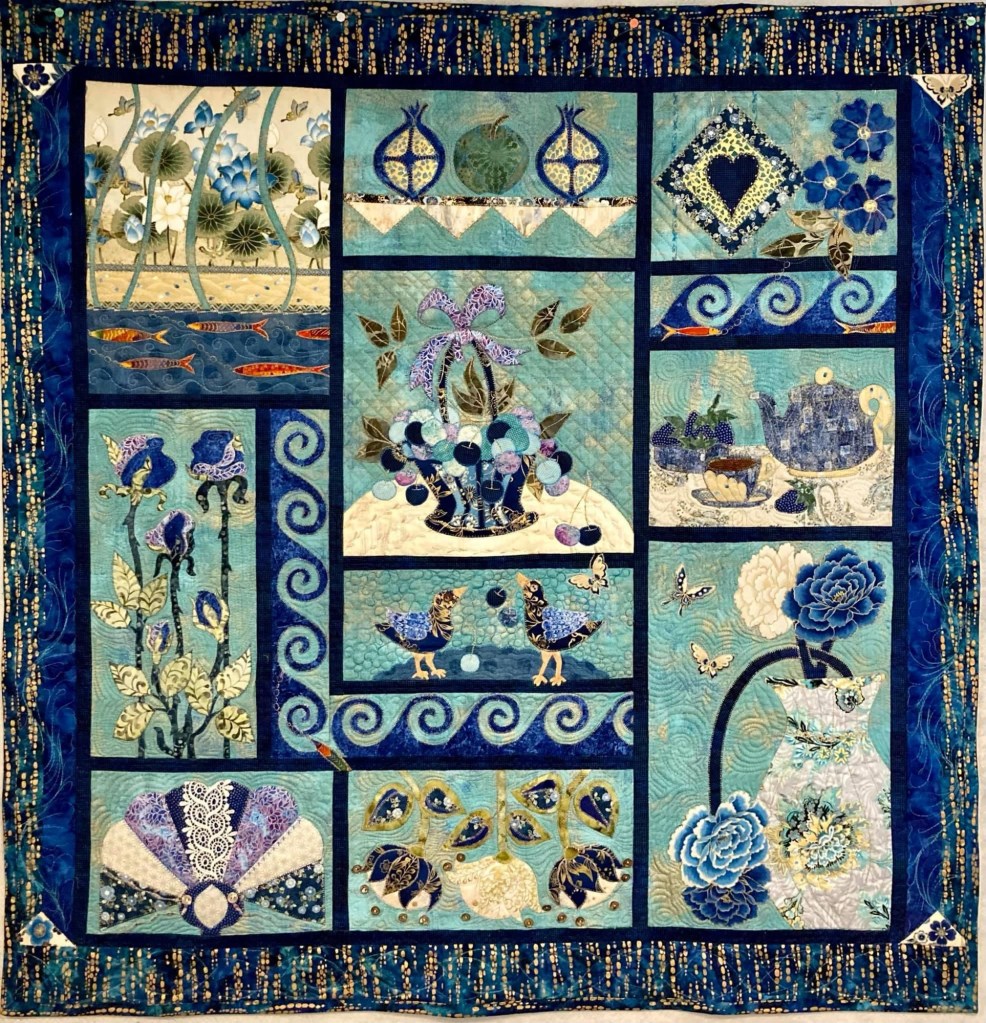
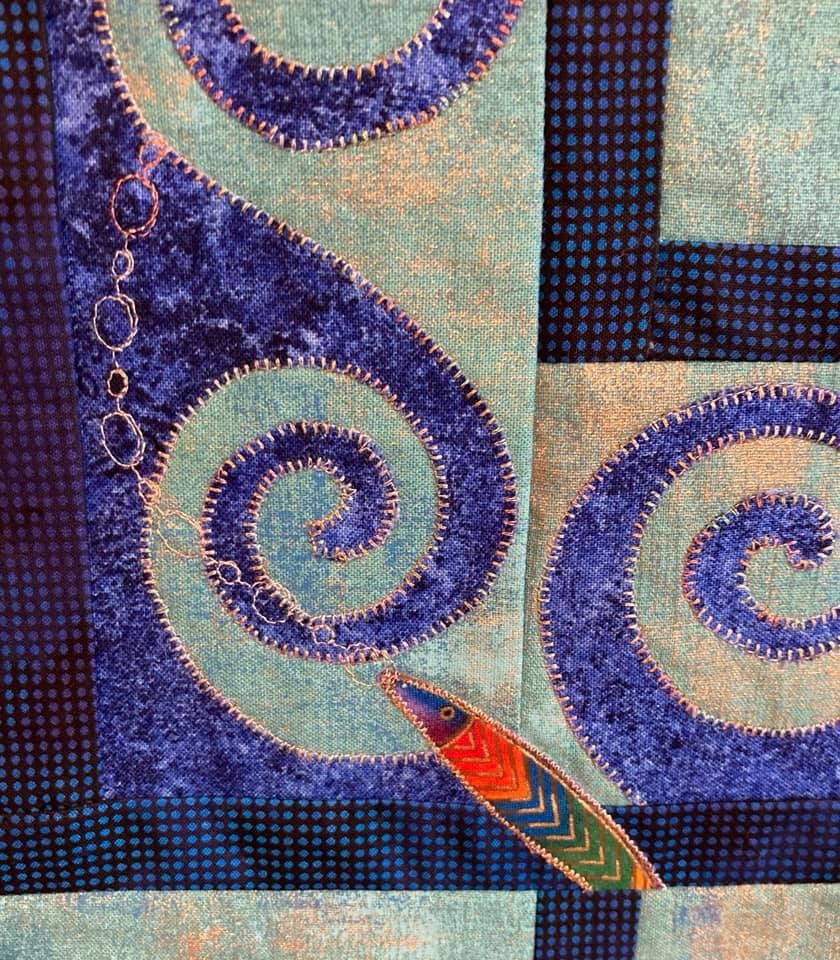
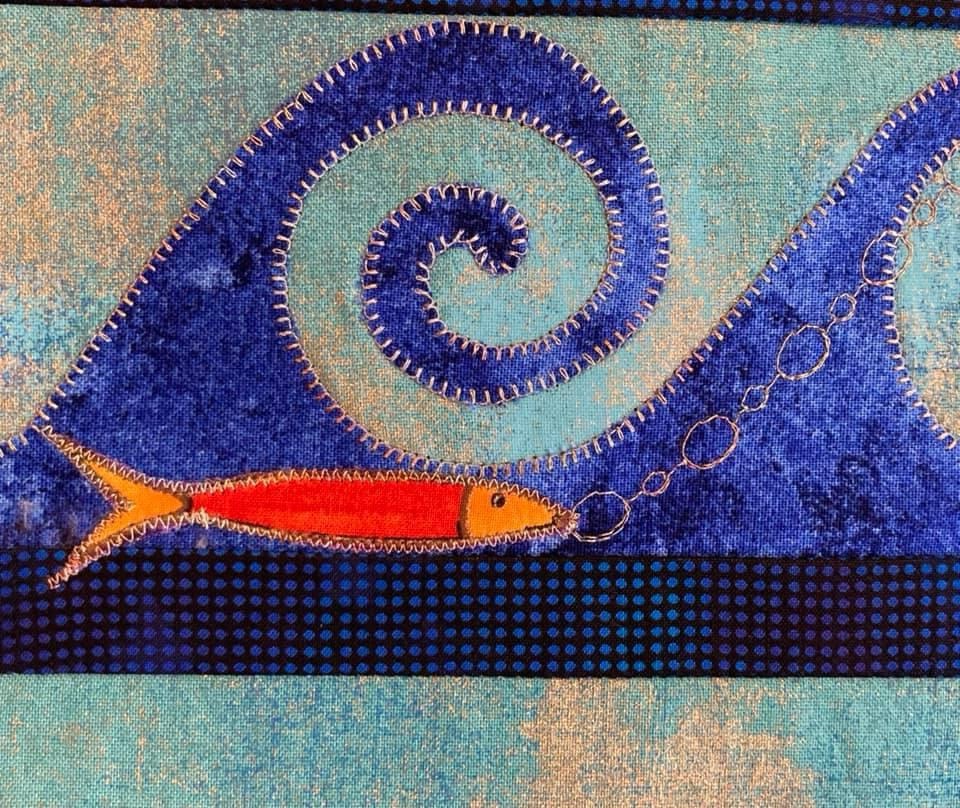
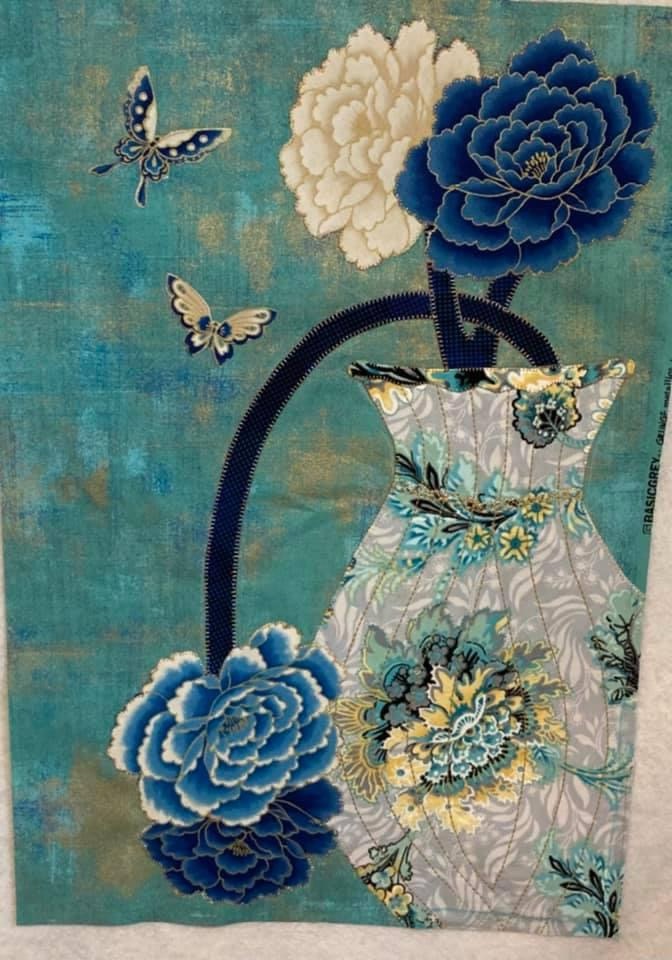
I consider Broderie Perse birds and fish to be my signature additions to an applique project. When I find a fabric that I want to use for BP, I will buy a full yard or two and use my favorite elements (like the Cardinal below or the fish above) in numerous projects.



Broderie Perse can add a magical touch to your applique or pieced work if you have the time and interest in pursuing it. Like any technique, it takes time and patience to learn. And like any useful endeavor, can be immensely rewarding.
Happy sewing and quilting all! Lennea
 Handmade by Lennea
I have never tried BP, but I’d like to some time. It will make me look at fabric a little differently.
LikeLiked by 1 person
I think it is really fun! But it is a bit of work to find fabrics that work well for it!
LikeLike
Thank you – I enjoy using BP
<
div>
<
div dir=”ltr”>
<
blockquote type=”cite”>
LikeLiked by 1 person
Thank you!
LikeLike